Branching Stories
Branching Stories is designed to rekindle people’s interest in reading.
The installation lets people walk through an interactive story, creating an experience that makes reading feel easier, more inviting, and more exciting — especially for visitors who feel that starting a book requires effort, time, or confidence they don’t always have.
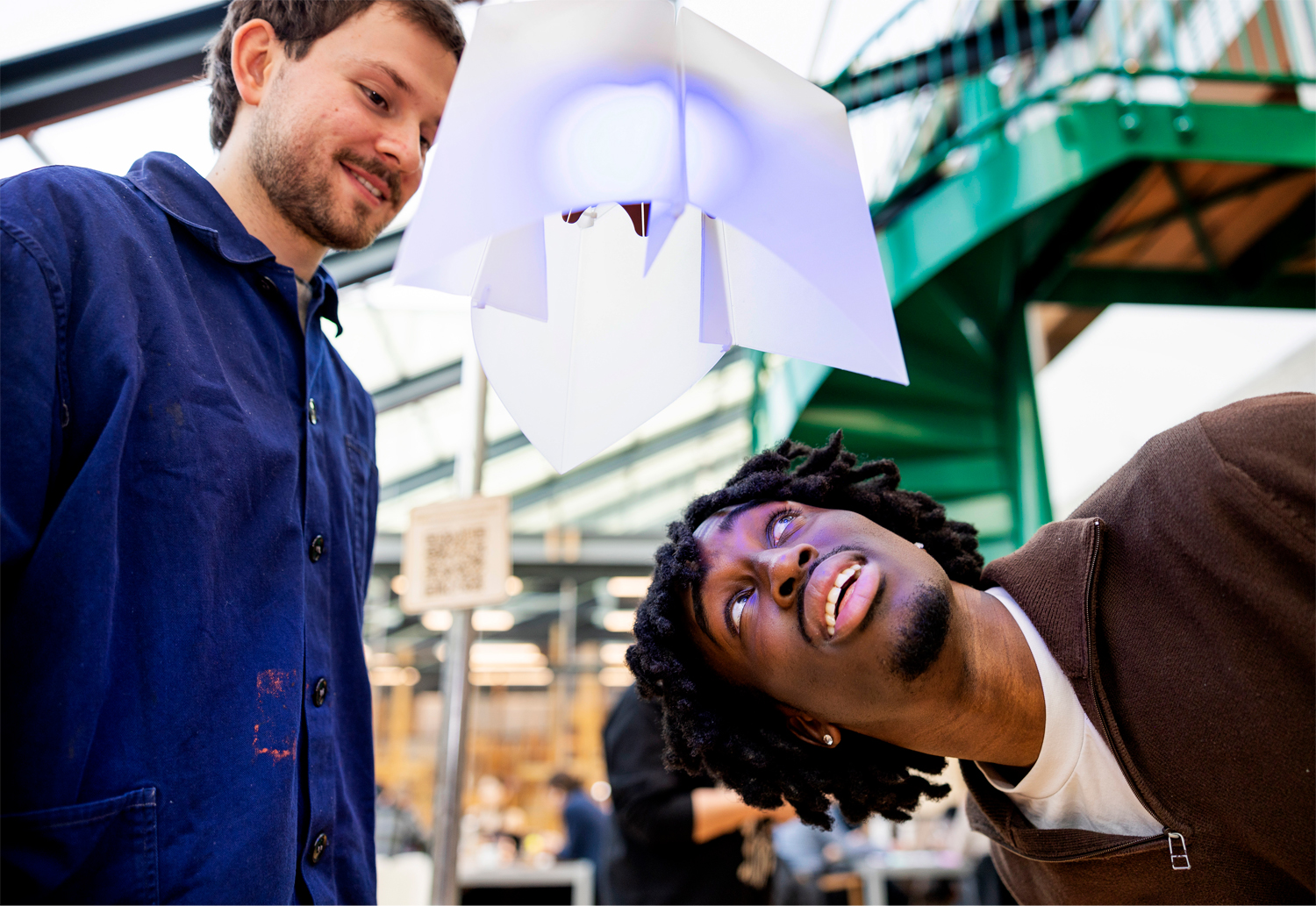
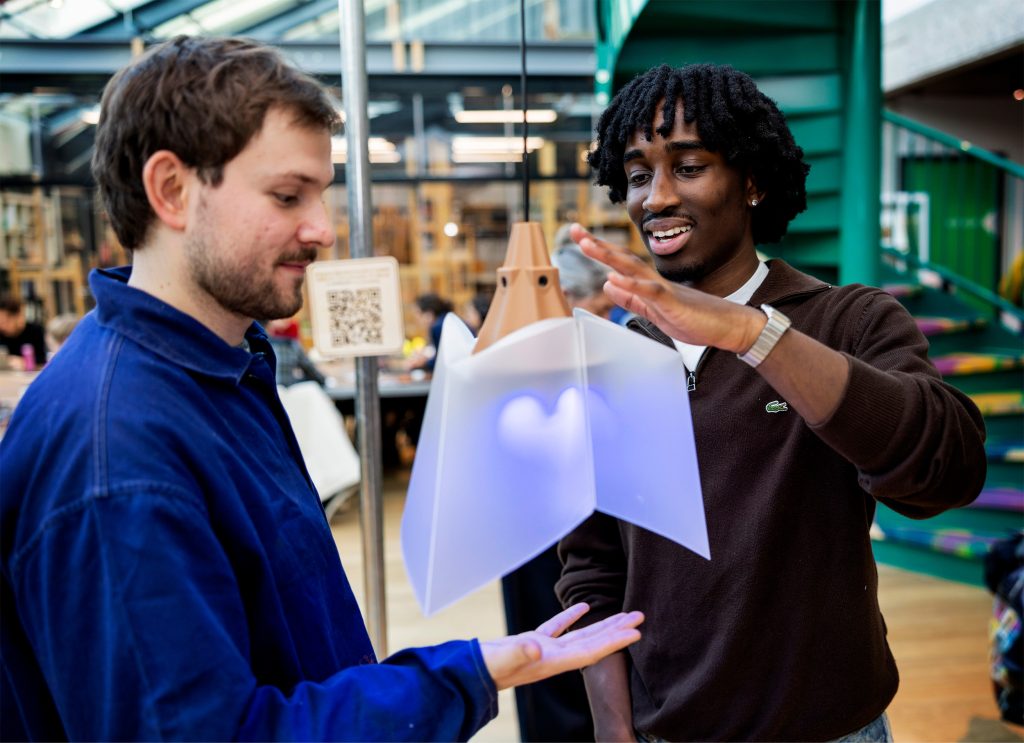
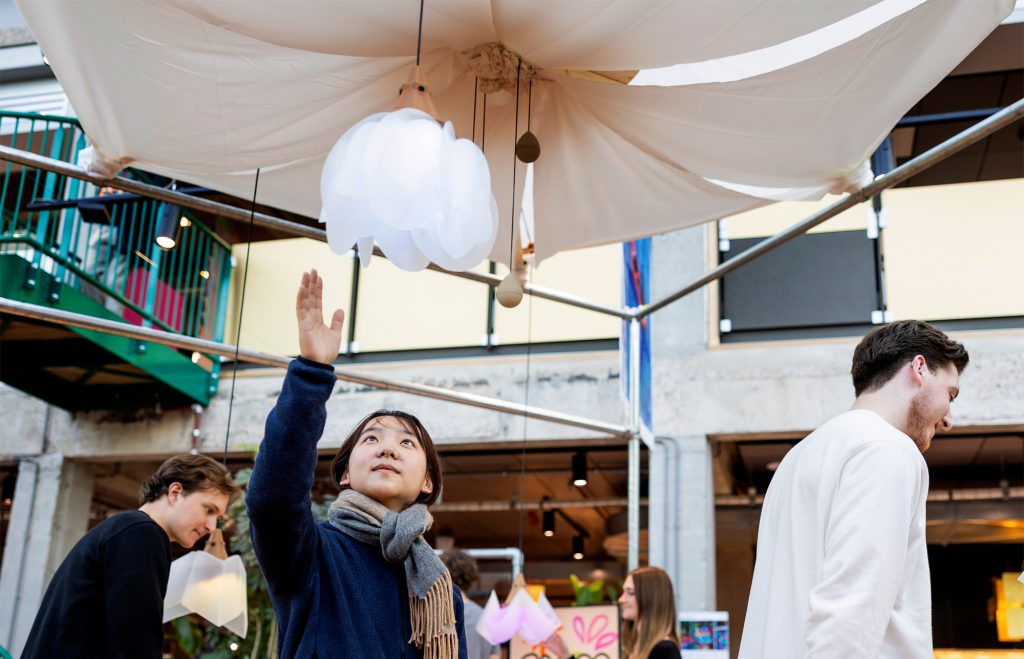
Several hanging flowers are lit by individual lights, in an immersive forest. Only one is lit at first. When you approach it, the story begins and you choose how it continues. After each choice, new objects light up to guide the next part of the story.
Each experience presents a complete sequence of story fragments, allowing visitors to engage with the narrative at their own pace.
Students: Ezra Spruijt, Just de Boer, Chengxiao Wu & Kris Borrell
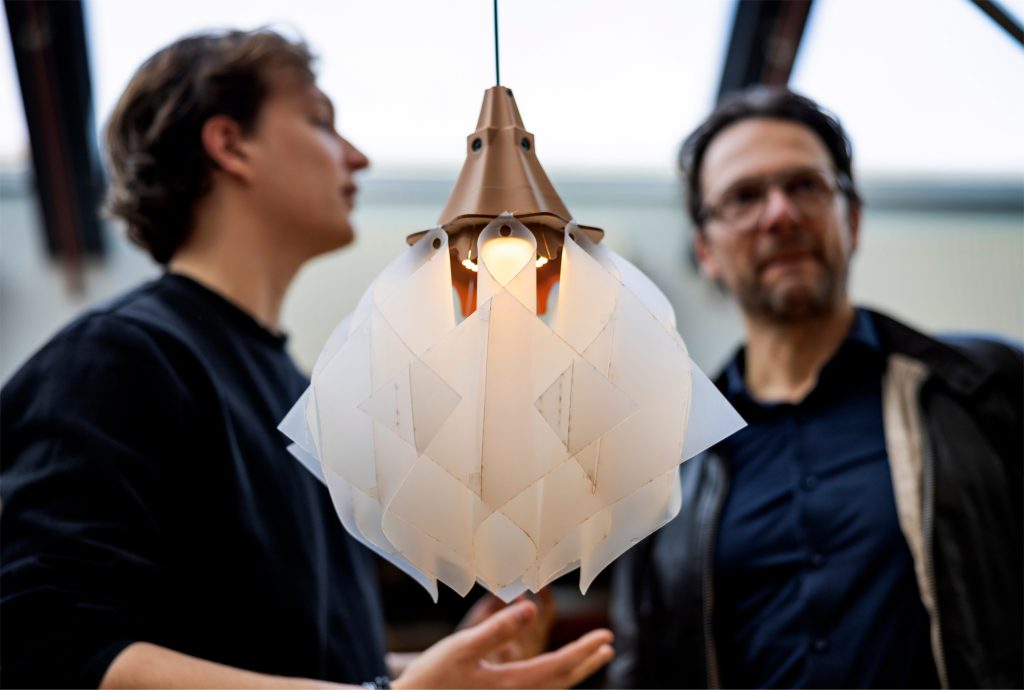
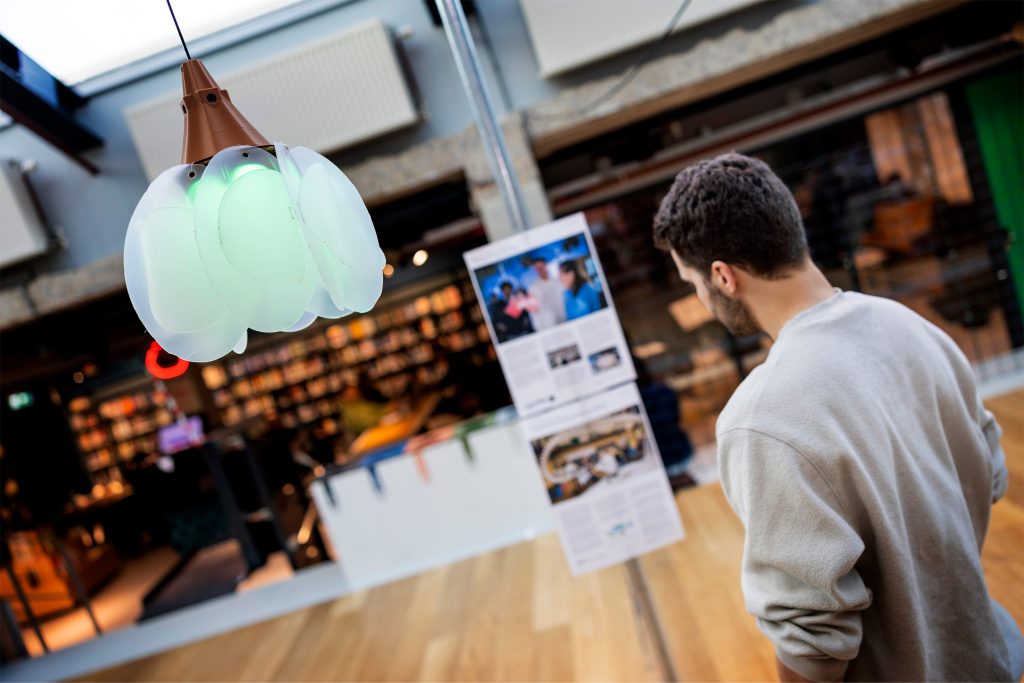
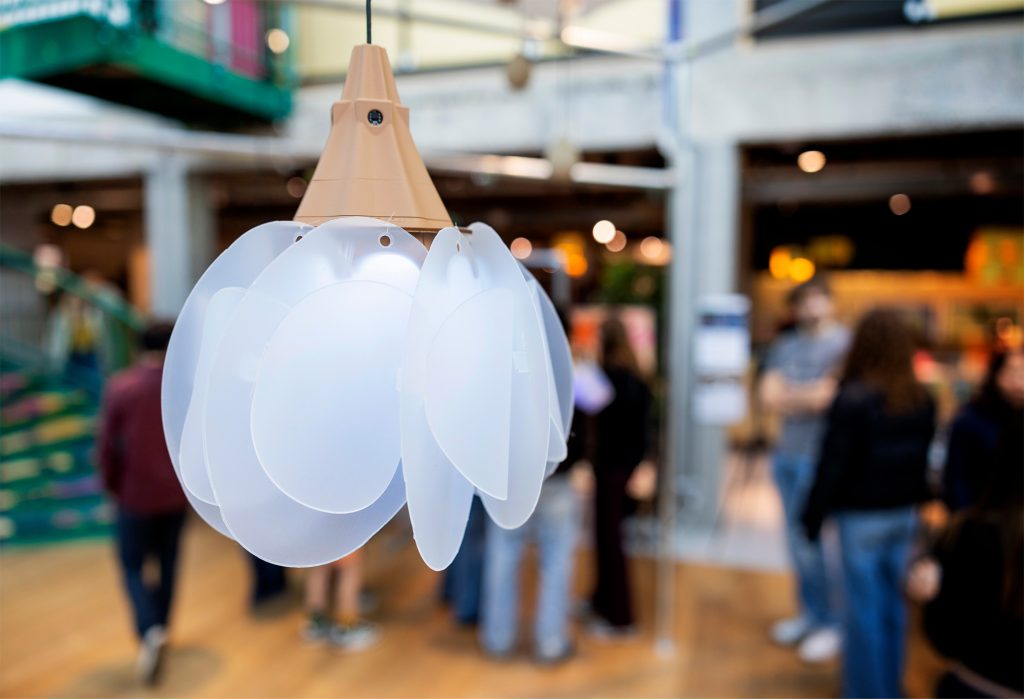
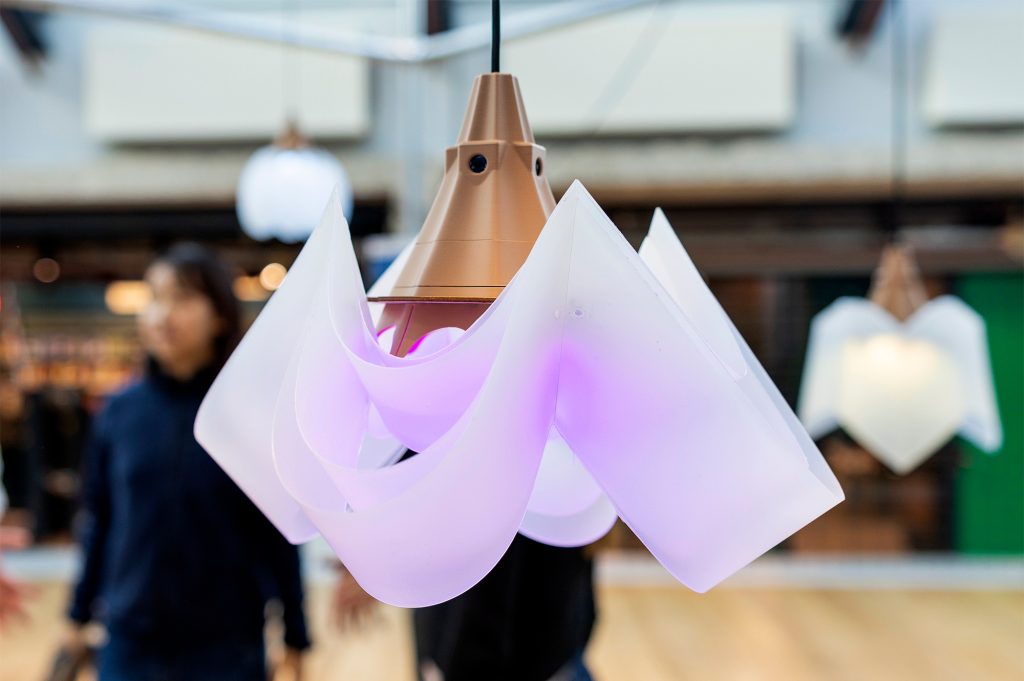
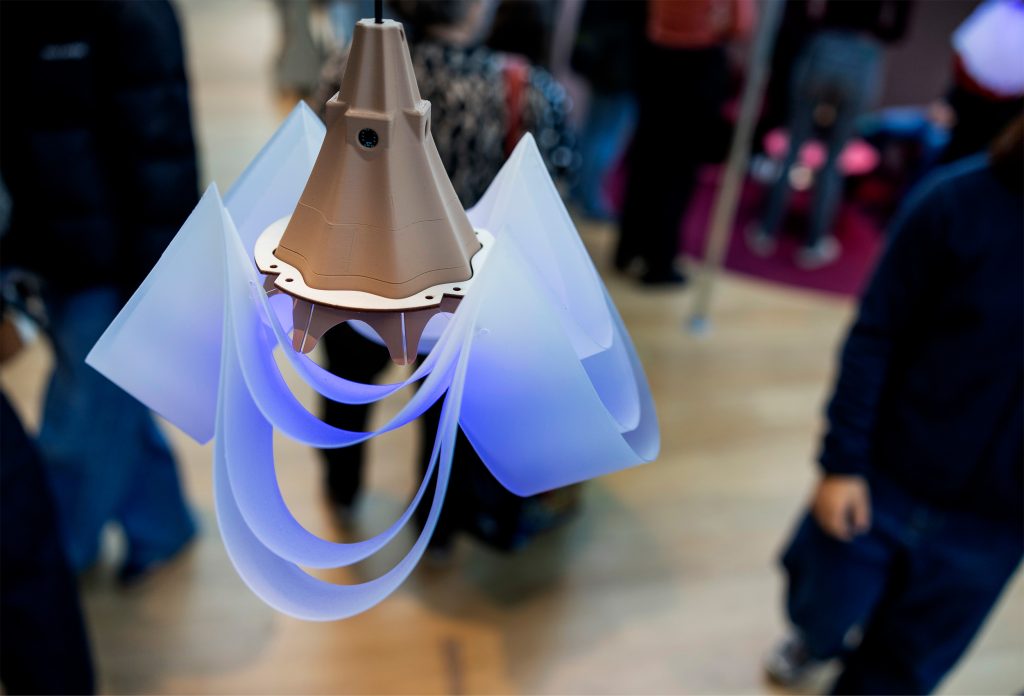
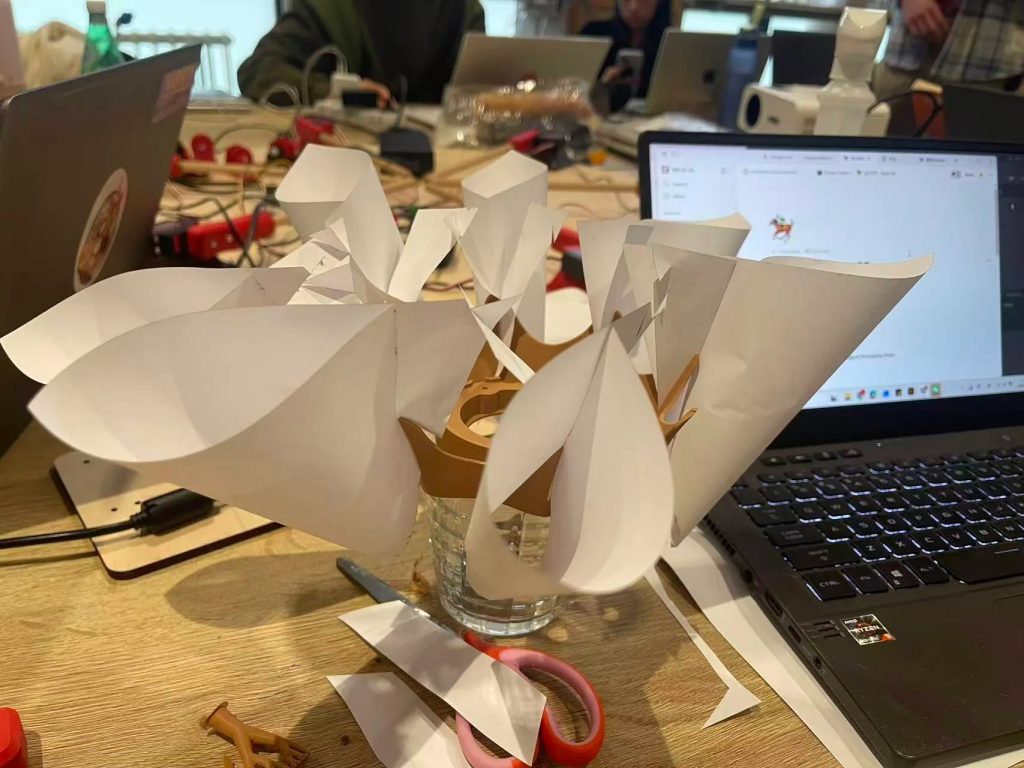
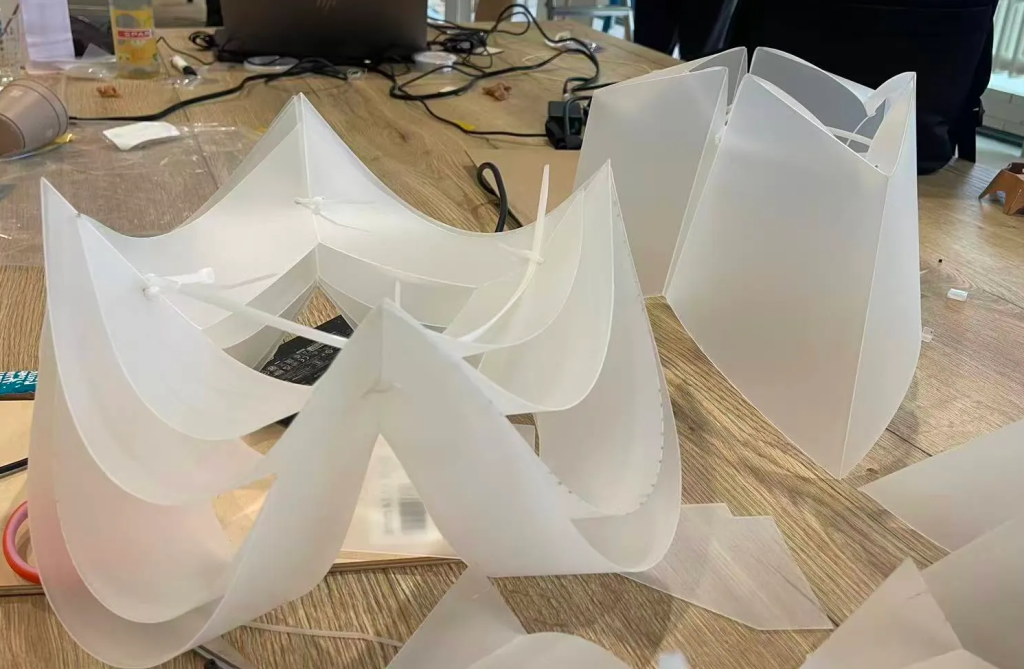
We first did research on origami patterns and did some tests with paper and laser cutters. After several trials of different patterns, we finally found a few that were both beautiful and sturdy as our final flowers.
We chose polypropylene sheets as the main material to create a soft, diffused
lighting effect.
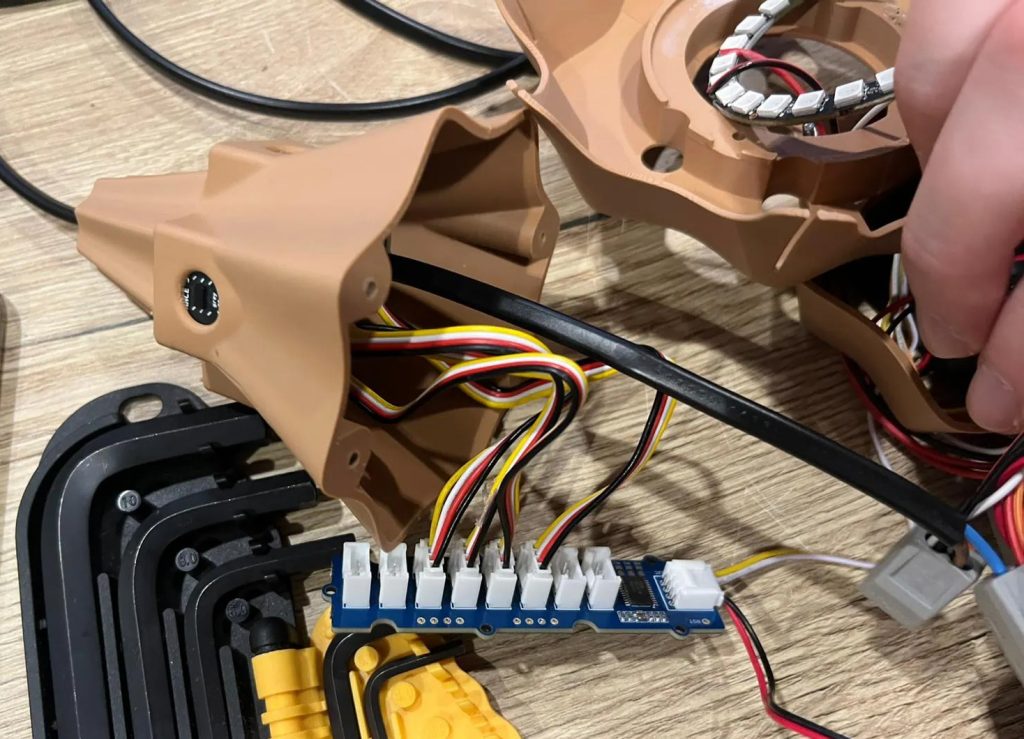
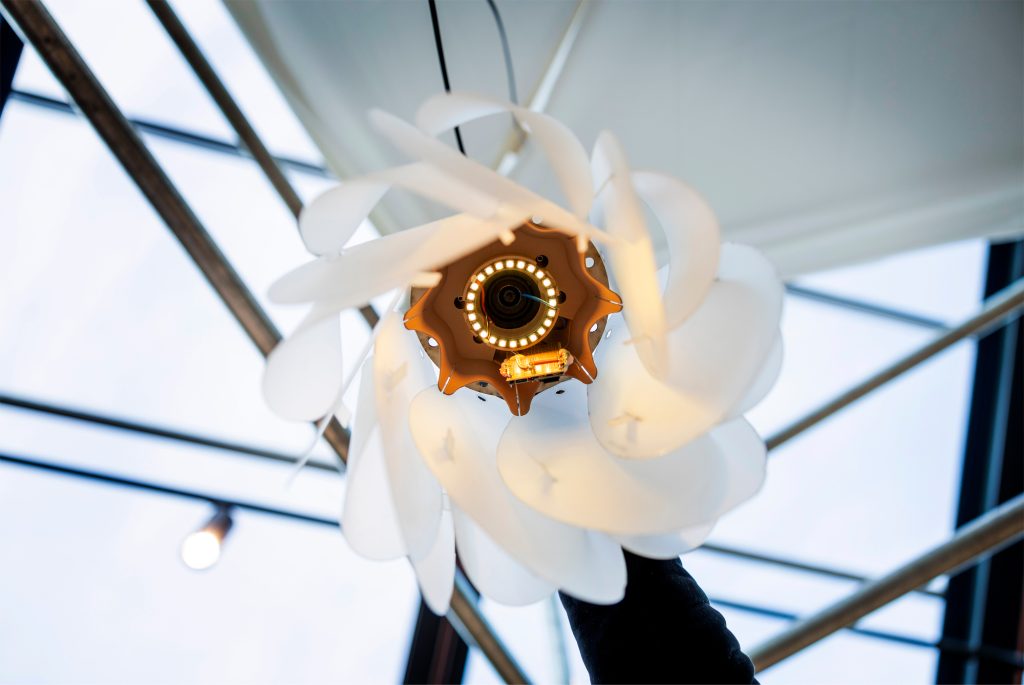
The 3D printed casing consists of three parts, the top part houses the sensors.
The middle part contains the various electronic components, such as the MP3 player board and the ESP32 Super Mini.
The bottom part contains the LED ring and serves as the connection to the flower component.
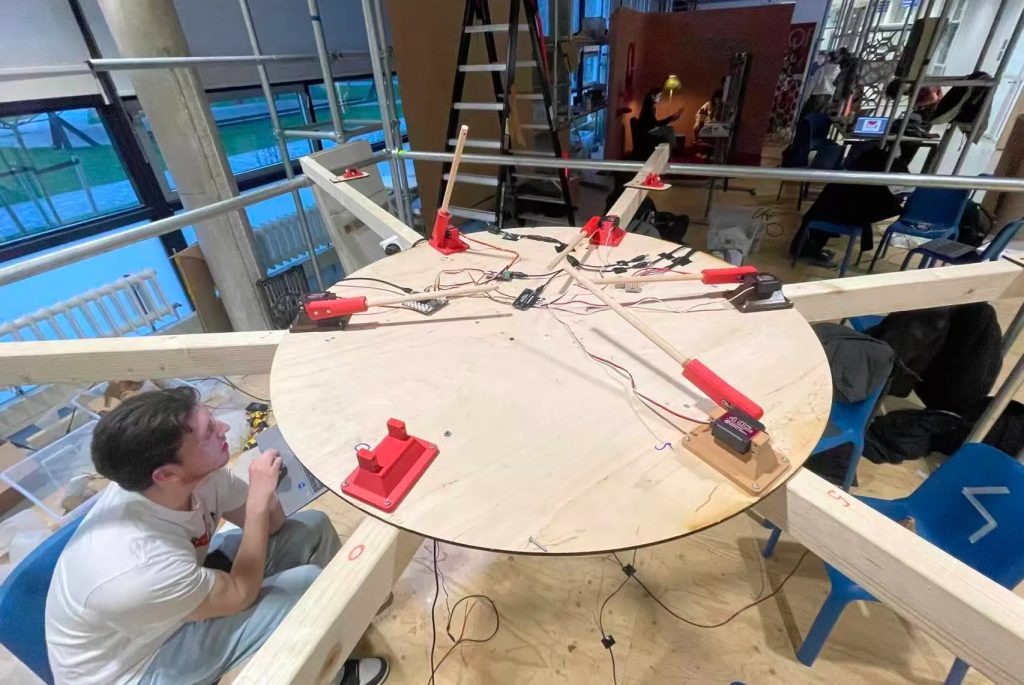
The upper part of the structure is responsible for moving the flowers up and down using powerful servo motors.
We drilled holes into the mounting plate, created 3D-printed weights and attached them to the opposite side of the arm, to balance the load on the servos and prevent overheating.
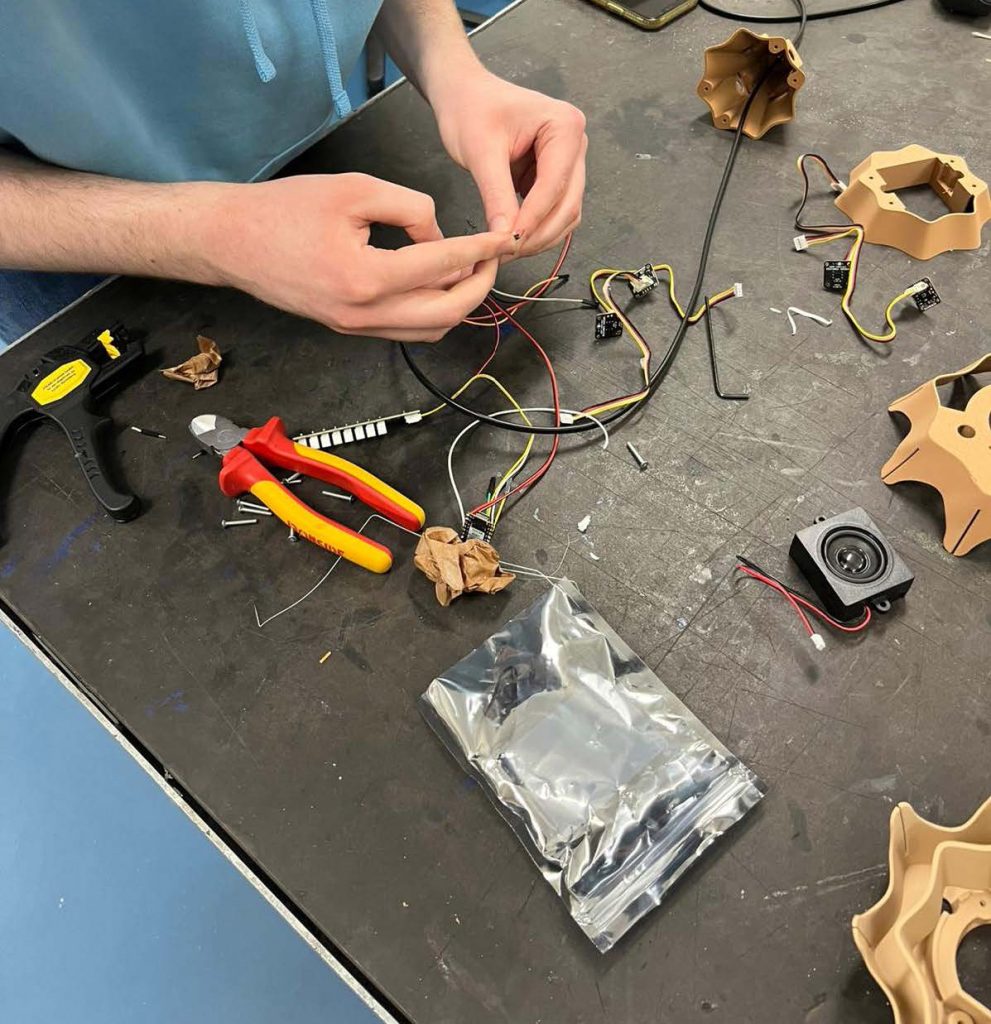
To construct the flowers, we first soldered all components together. This process involved a lot of trial and error, but as a result, we became proficient at soldering.
Once all components were soldered together, they could be placed inside the flower. Everything fit precisely into the designated spaces, resulting in a neatly finished appearance. The 3D-printed parts were then screwed together using bolts in the pre- printed holes.
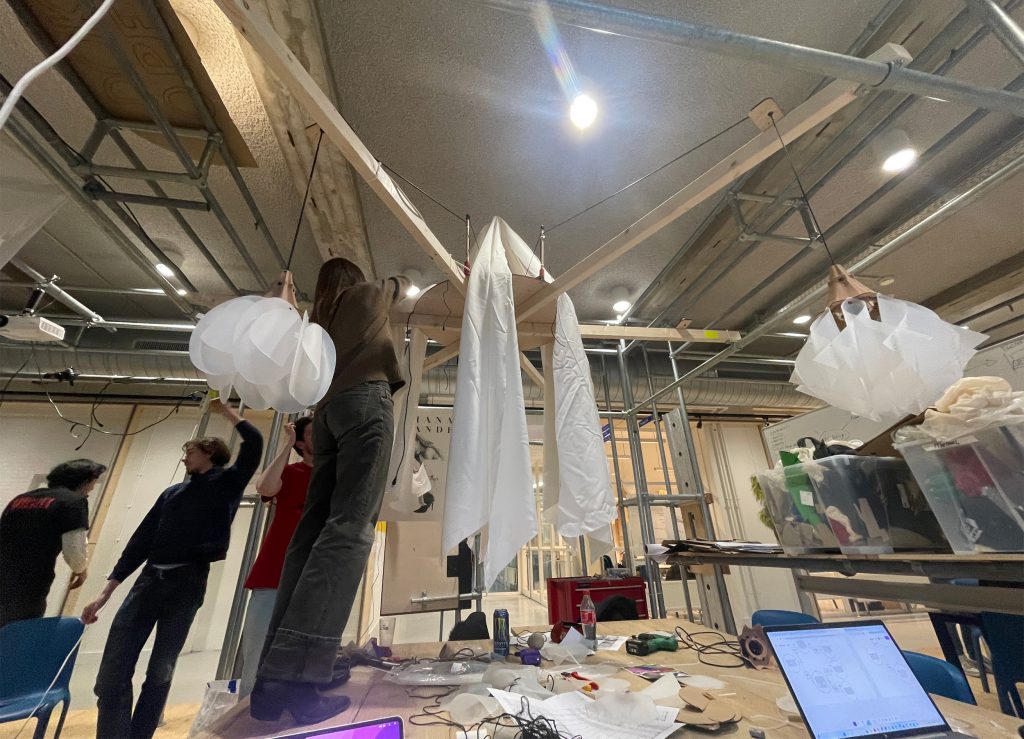
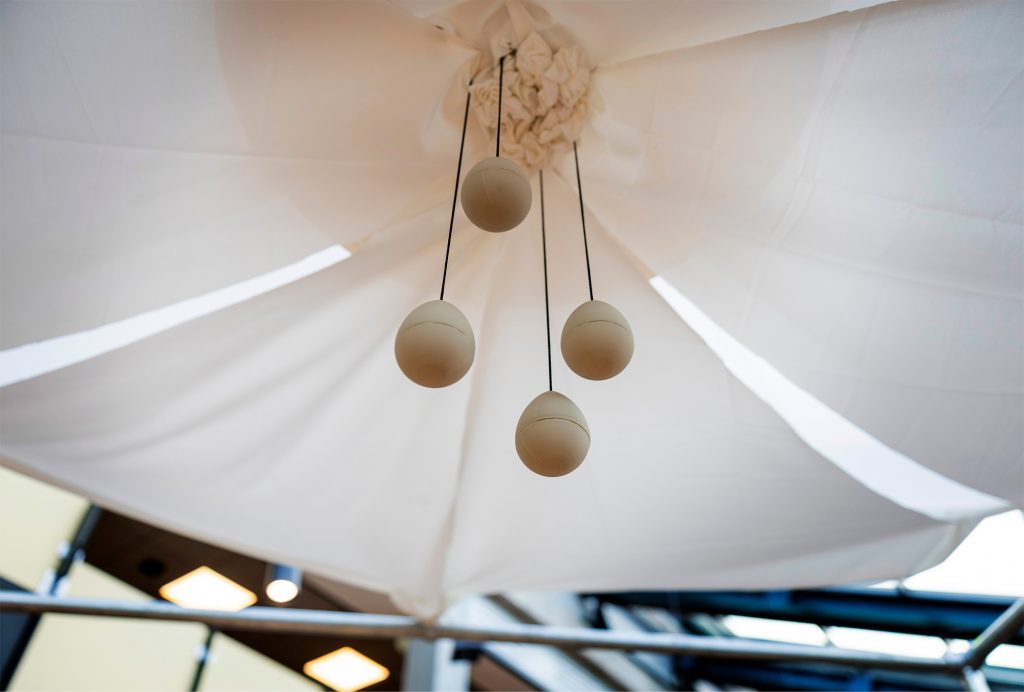
At the top of the installation, the cables and electronic mechanisms were visible, so we decided they needed to be hidden.
Testing different forms and materials, we eventually realized that using white fabric and letting it fall naturally was the best solution. This approach softens the structure and adds a sense of fluidity and movement.