Glassmates
GlassMates offers a small, personal and creative interaction on the window of the library that encourages passers-by to pause, possibly contribute, and feel a connection to the space. Transforming a simple glance at the window into a creative encounter, the installation helps the library feel more lively, open, and human.
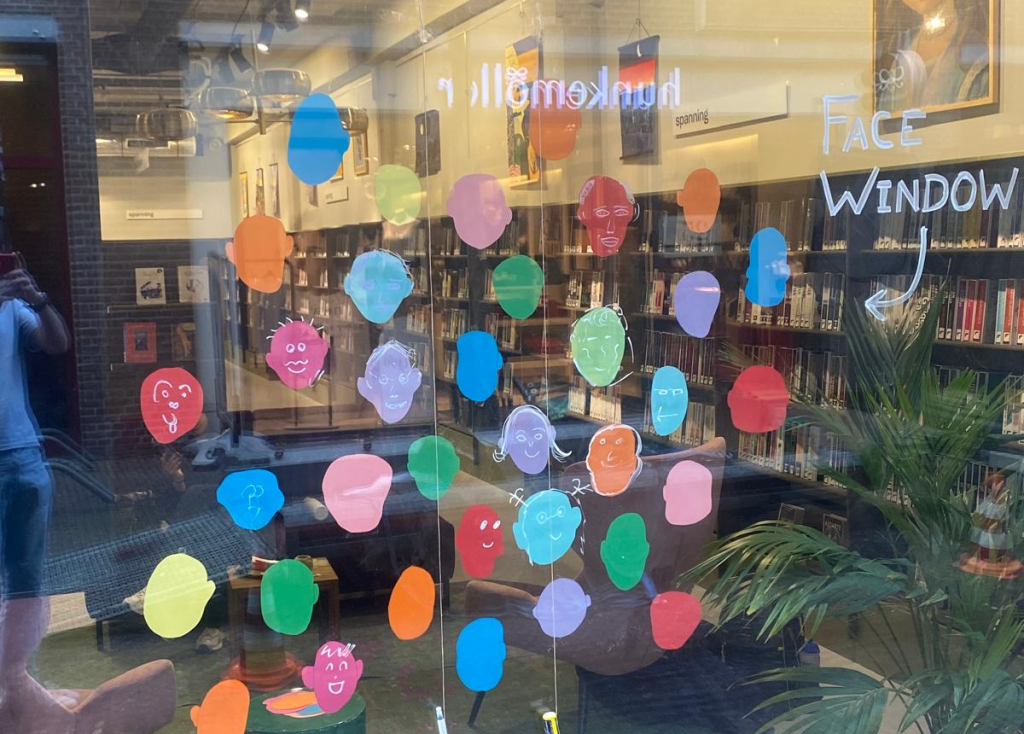
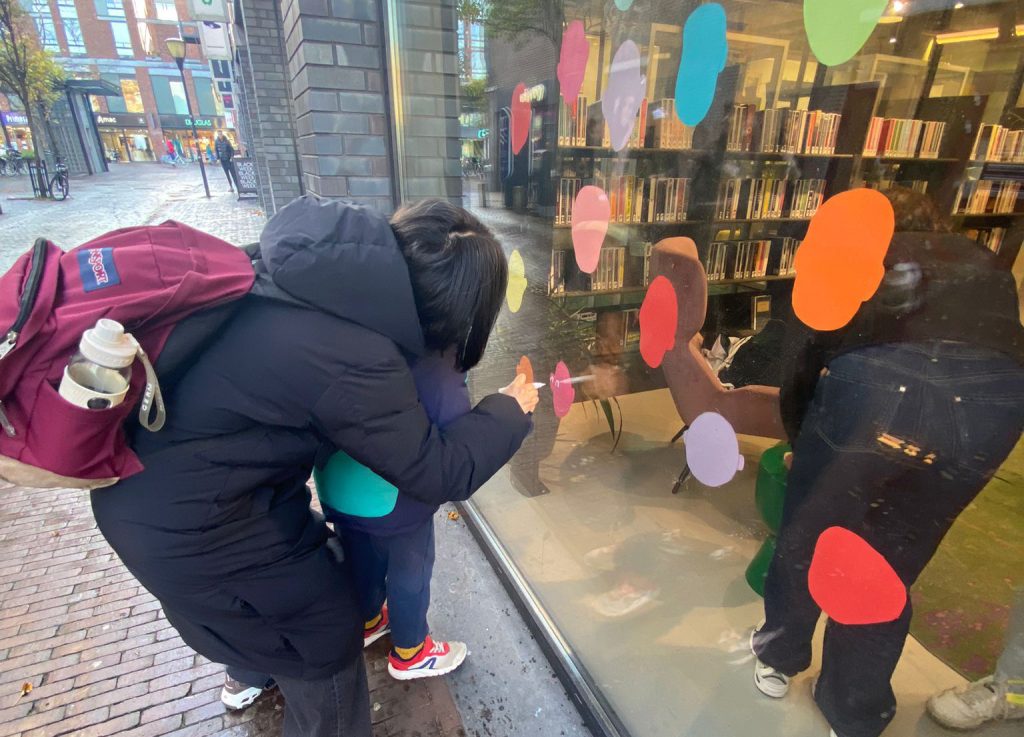
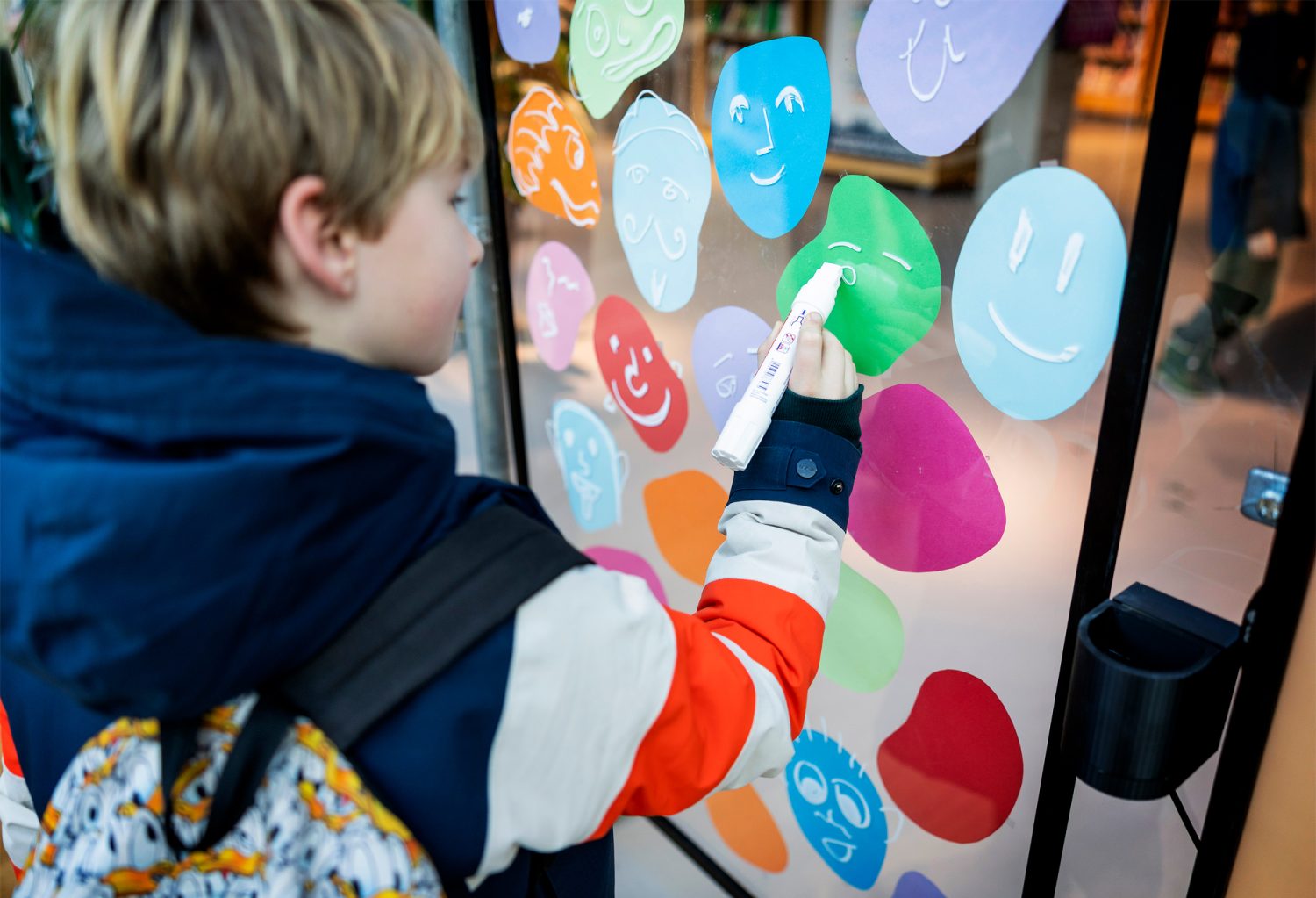
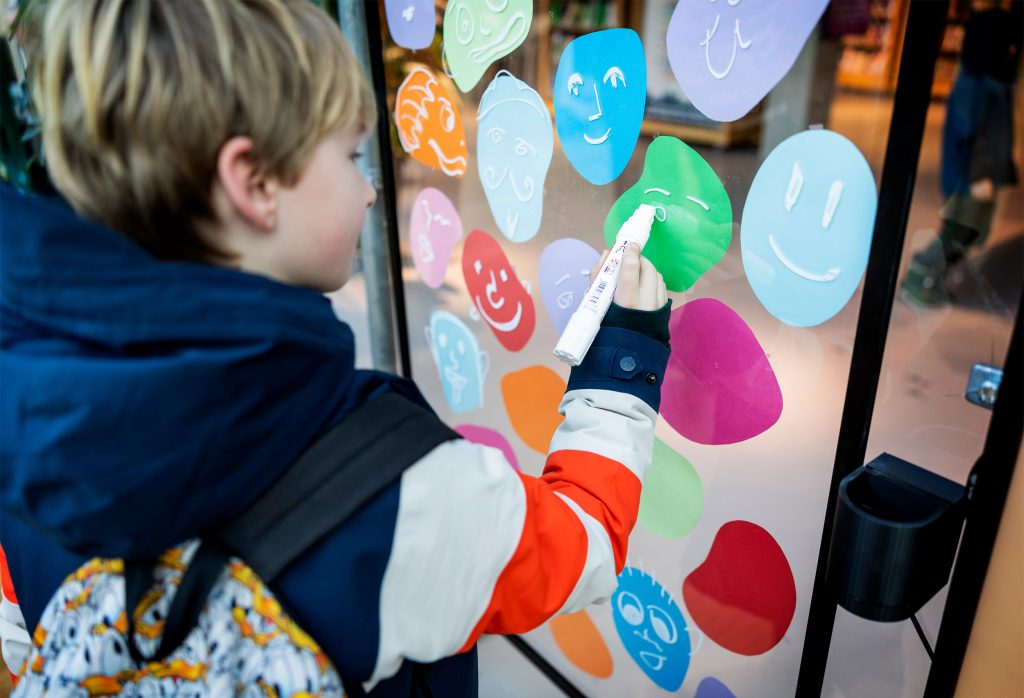
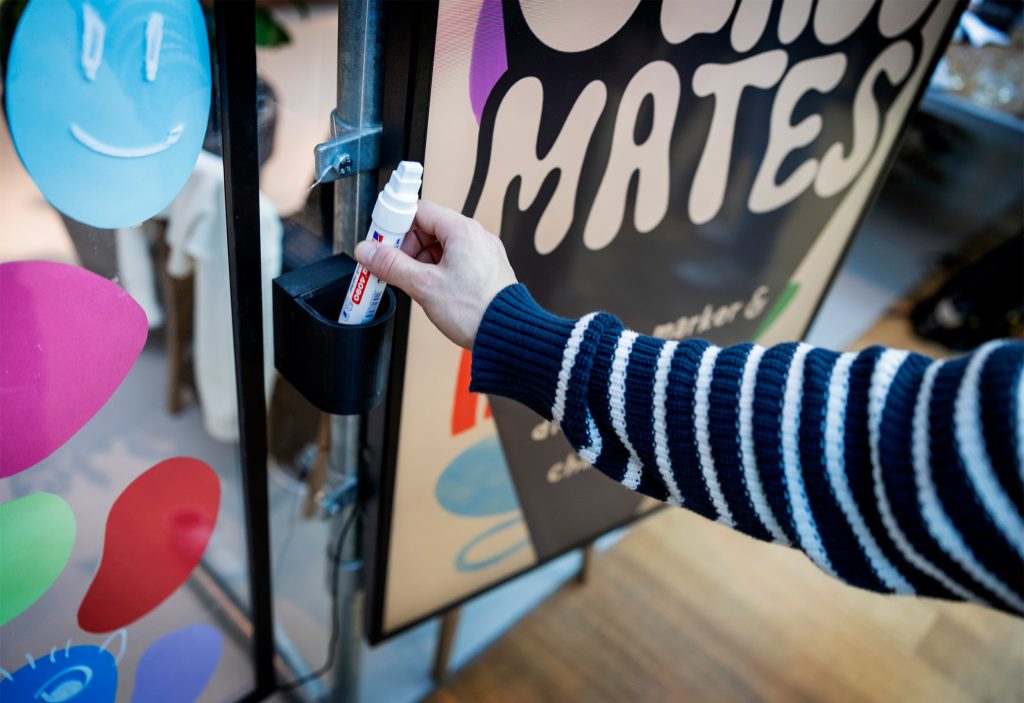
As people walk past the library, colourful character silhouettes on the window draw passers-by closer. Some figures have empty faces, inviting interaction. White markers placed next to the window allow visitors to quickly add their own facial features.
After finishing a drawing, the user’s attention is turned to the large screen next to the drawing area. On there, a door opens to reveal the recently drawn character animated inside the library, inviting the user to step in. Inside, the user sees their own character moving inside real bookshelves through a projection.
Students: Dorit Sitar, Daan Hoeke, Sofia Hoyos & Luuk Buurman



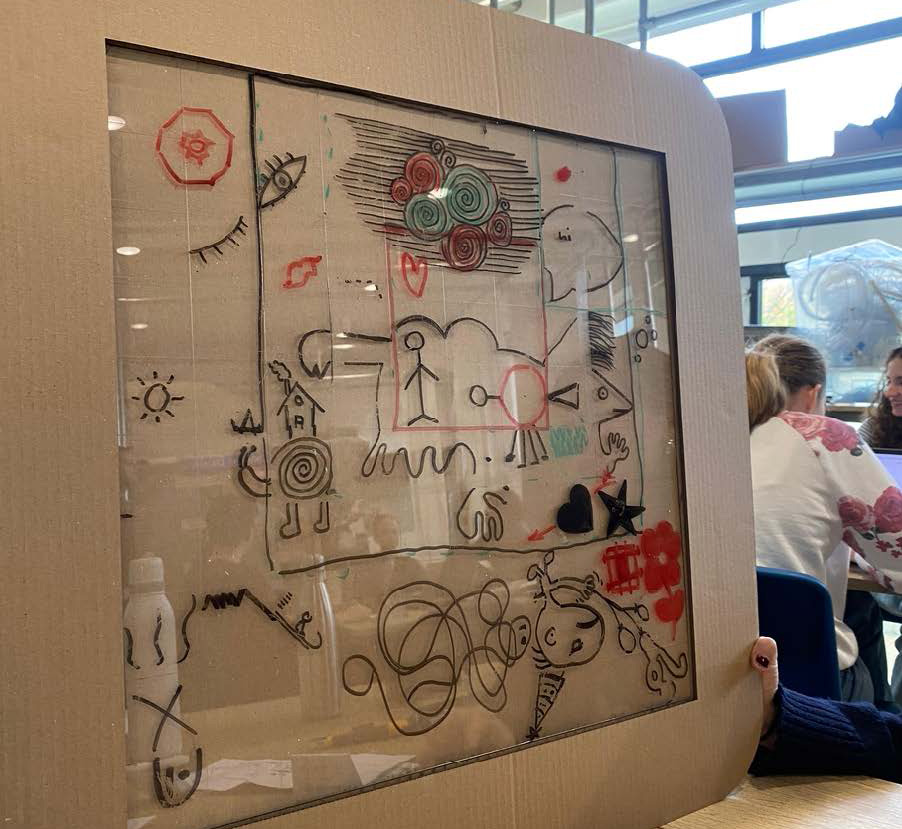
We began prototyping by building a drawing canvas using a transparent PMMA plate with a grid, simulating the library windows. This setup allowed multiple users to contribute small doodles to a single shared image.
We tested this on the window of DOK OPEN’s side entrance. We observed that people passing by rarely stopped, and the step from the street into the library felt too large.
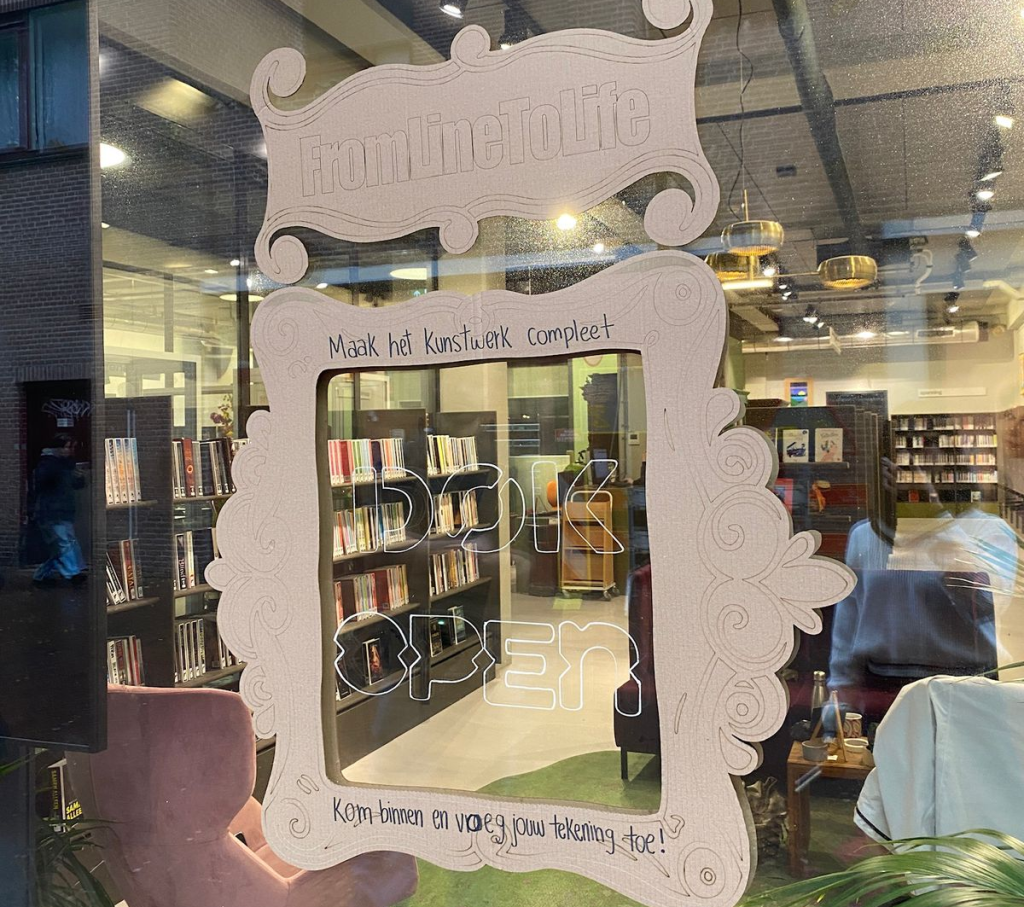
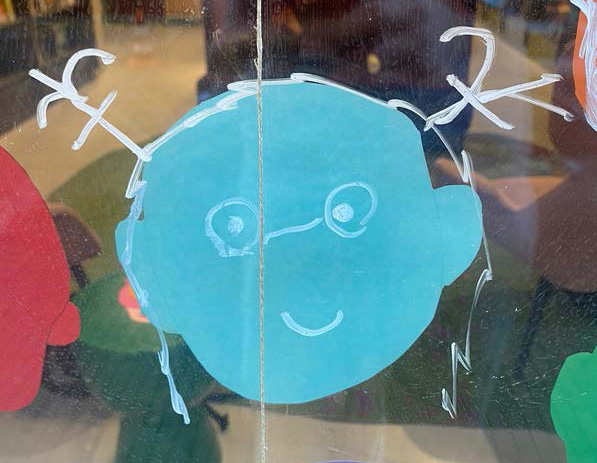
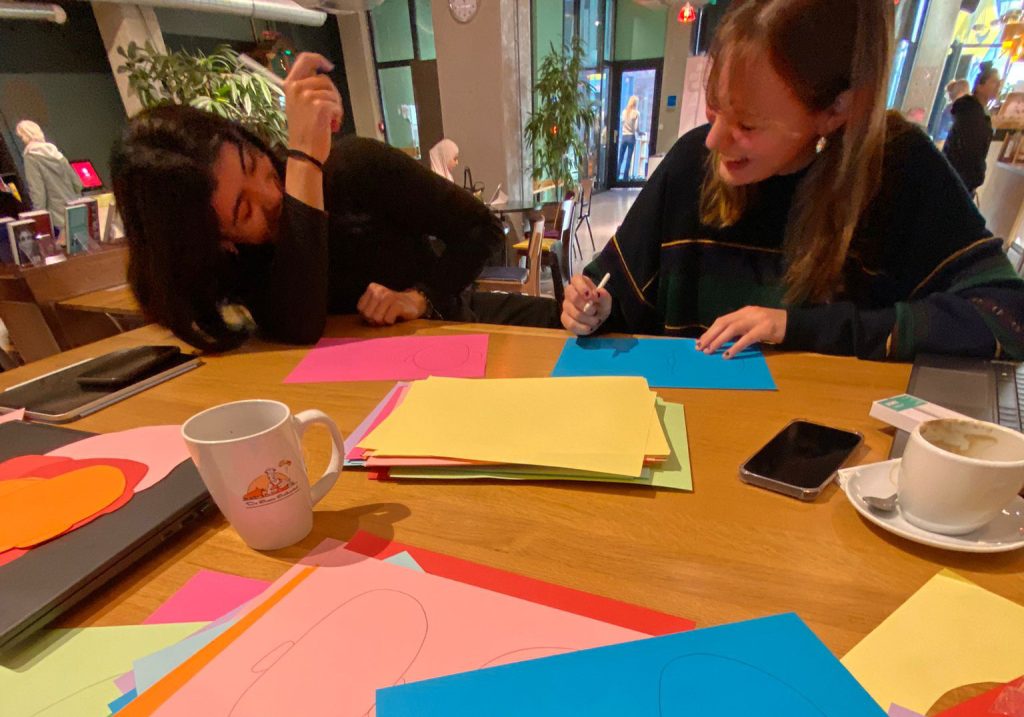
A big turning point in our design process came when we introduced pre-cut face shapes on the window and invited people to draw themselves.
Testing showed there was still room for improvement, which led us to a new concept: projection mapping. The drawn faces would now appear as projections on one of the library’s bookshelves and users can then search for their character inside the library.
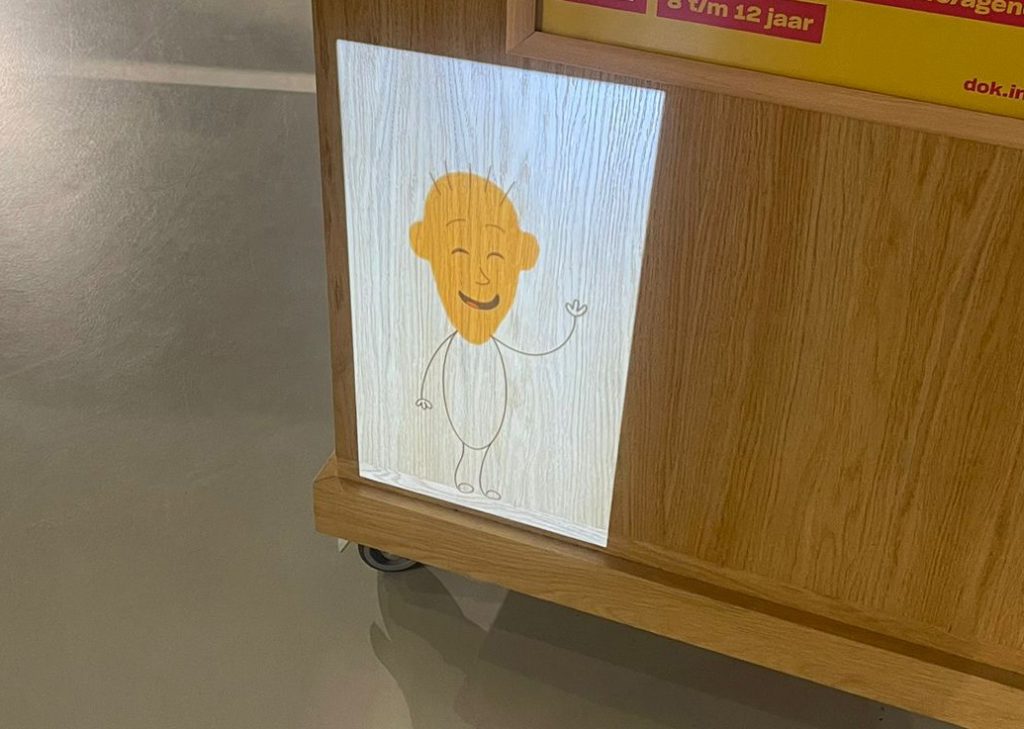
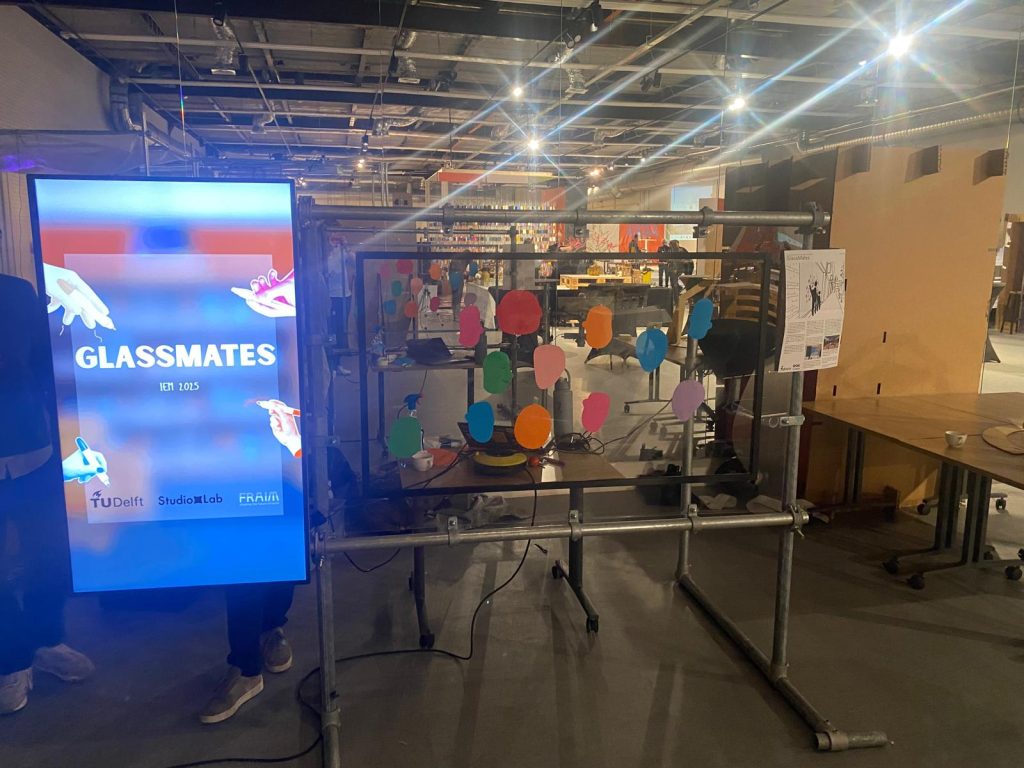
By integrating an infrared touch frame and a pen-detection system, drawings could be digitized instantly. This made it possible to animate the characters using AI and project them inside the library, though this final step was still partly manual and not fully automated.